
Pilates for Knee Pain Relief in NYC
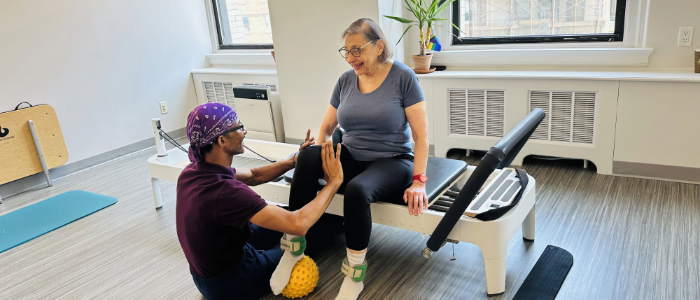
Why the Story Behind Your Knee Pain Matters
Most knee pain conversations start with a diagnosis. We tend to start with questions.
- What hurts?
- When does it happen?
- What changed?
- What have you stopped doing because of your knee pain?
The answers often tell us far more than the diagnosis alone. While the knee may be where you feel the problem, the story behind that pain is often much bigger.
“The knee is often where people feel the problem, but rarely where I start looking. The knee sits between the foot and the hip, constantly responding to both. When those areas aren't supporting each other well, the knee often ends up doing more than its share. My job is to help clients understand those relationships so movement feels stronger, more balanced, and more reliable.”
Knee Pain Rarely Starts at the Knee
Most people come to us because something hurts.
Their knee hurts going downstairs.
Their knee hurts when they stand up from a chair.
Their knee hurts after walking a few blocks.
Their knee feels unstable.
Their MRI shows arthritis.
Their doctor says it's bone-on-bone.
They assume the problem is the knee. Sometimes it is. Often, it isn't the whole story.
At Dynamic Body Pilates, we look at how the entire body is contributing to what the knee experiences every day. We look at how you stand, walk, balance, breathe, shift weight, and move through space. We look at the hips above the knee, the feet below it, and the movement habits that may have developed over months, years, or even decades.
Many of our clients have already done physical therapy, worked with trainers, had injections, or tried to push through the problem on their own. They're not looking for another list of exercises. They're looking for an explanation that makes sense.
Our Philosophy on Knee Pain
When clients come in with knee pain, they're often expecting us to spend most of the session focused on the knee. Sometimes we do. Often we don't.
The knee sits in the middle of the leg. It is constantly responding to what's happening above it and below it. I often think of it like a string. If you hold a string from the middle, it sags. Pull it evenly from both ends and the center becomes supported.
The knee works similarly. What happens at the foot influences it. What happens at the hip influences it. The way you breathe, balance, and organize your posture influences it. That's why two people can have the same diagnosis and move completely differently.
Our goal isn't simply to make the knee stronger. It's to help you understand how the knee is connected to the rest of the system so it no longer has to absorb the consequences of everything else.
This whole-body perspective is the same approach we use throughout our work with clients seeking relief from chronic pain, balance concerns, strength loss, and age-related movement limitations.
For many clients, this moment — understanding how the knee is connected to the rest of the system — is the moment things begin to change. Not because the knee suddenly became different, but because they start to feel how the rest of their body contributes to supporting it.
“My favorite part is that they assess your entire body as a whole, meaning that even though I have knee problems, Rebecca identified a bunch of other parts of my body outside the knee that contribute to the problems that need to be worked on as well.”
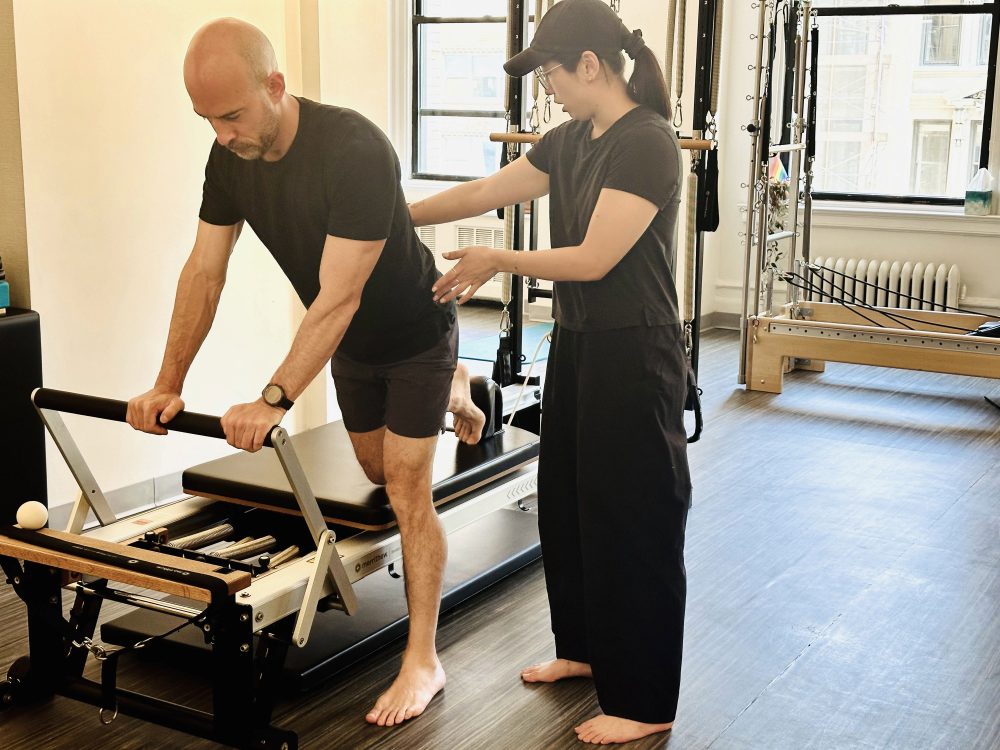
What Your Knee Pain May Actually Be Telling Us
Every knee pain story is different. The diagnosis matters, but so does everything surrounding it. Here are a few of the conversations we have every day and what we're looking for beneath the surface.
Every knee pain story sounds a little different. The first step is figuring out what yours is telling us.
How Knee Pain Connects to the Bigger Picture
Knee pain rarely exists in isolation. Depending on what's contributing to your symptoms, your program may also focus on improving strength, balance, flexibility, and overall movement efficiency.
- Pilates for Pain Relief – Learn how we address chronic pain through whole-body movement assessment and individualized programming.
- Pilates for Balance – Improve stability, coordination, and confidence in daily movement.
- Strength Training Through Pilates – Build functional strength that supports joints and improves movement capacity.
- Pilates for Flexibility & Mobility – Restore movement options that can reduce unnecessary stress on the knees.
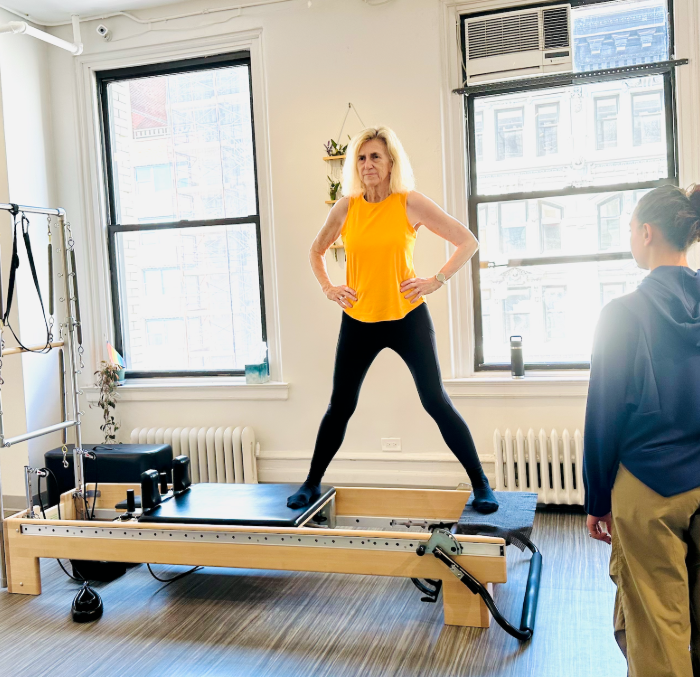
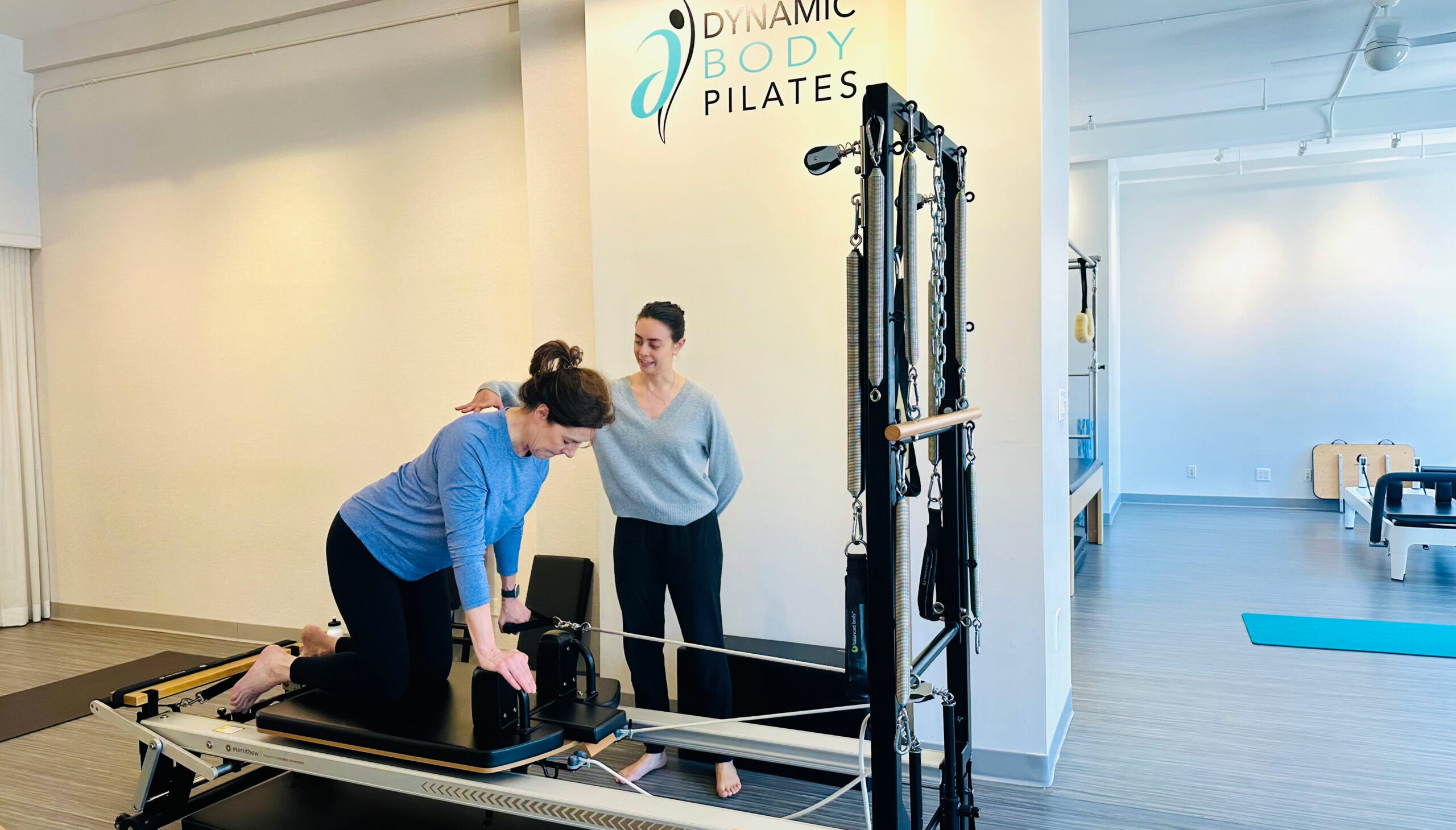
"Coming to Dynamic Body Pilates has made a big difference in my life. I was waking up stiff and in pain as I began the day and now all that is gone as is knee pain around my implant. I’ve learned a great deal about my body and how I can move to preserve mobility as I age."
A Private Pilates Session To Evaluate Movement Beyond Knee Pain
At Dynamic Body Pilates, we do not force clients into standardized workouts or generic Pilates sequences. Every program begins with a Dynamic Body Assessment Session. We look at gait mechanics, hip and foot control, balance, compensation patterns, joint restrictions, and how the rest of the body may be transferring force into the knee over time. For some clients, the issue is instability. For others, rigidity. Some move well until fatigue sets in. Others brace before movement even begins.
Sessions evolve accordingly. The objective is not simply strengthening the knee. It is changing the underlying mechanics that keep the knee overloaded in the first place.
The goal is not temporary relief, but helping your body move with more efficiency, adaptability, and resilience, so your knees no longer have to absorb the consequences of everything else.
A Private, 1:1 Session To Evaluate Movement Beyond Knee Pain
Whether your pain is recent or something you have been managing for years, we help you understand the patterns contributing to it, and create a personalized path forward.
Schedule your complimentary consultation to get started.