Shoulder & Upper Back Pain Relief in NYC
Finally Understand—and Relieve—Pain Between Your Shoulder Blades
Pain between your shoulder blades can be frustrating, persistent, and surprisingly limiting. Whether it shows up after long hours at a desk, during workouts, or even while resting, this type of discomfort often reflects broader movement patterns throughout the body—not just a local issue in your upper back.
At Dynamic Body Pilates, we take a whole-body approach to upper back pain relief in NYC between the shoulder blades. Rather than focusing only on where it hurts, we look at how your body is organizing movement, where it may be compensating, and why this area is taking on more work than it should.
You don’t have to keep managing the pain—there’s a more thoughtful way to resolve it.
Causes of Pain Between Shoulder Blades and in the Upper Back
Pain in between the shoulder blades rarely comes from just one source. More often, it develops from repeated movement patterns, postural habits, or compensation from other areas of the body.
Common contributors include:
Prolonged sitting or screen use
Poor posture or collapsed upper back alignment
Weakness in the mid-back, shoulders, and deep core
Overuse from workouts, lifting, or repetitive motion
Scoliosis or spinal asymmetry
Old injuries or post-surgical compensation
Stress-related tension and shallow breathing patterns
When your body isn’t sharing load efficiently, the muscles between your shoulder blades often step in to stabilize and support—leading to tightness, fatigue, and discomfort over time.
The Real Story Behind Shoulder Blade & Upper Back Pain
That tight spot between your shoulder blades isn't always the problem. More often, it's the place that's working hardest to compensate for how the rest of your body is moving.
Some people notice it after long hours at a computer. Others feel it while exercising, driving, traveling, or simply trying to get comfortable at the end of the day. Whatever brought you here, our goal isn't simply to loosen tight muscles. It's to understand why they keep tightening in the first place.
These experiences aren't just about one tight muscle or one sore spot. They often reflect how your shoulders, rib cage, spine, hips, and core have learned to work together over time.
When movement becomes more balanced and efficient, the muscles that have been doing all the work finally have the opportunity to stop protecting and start relaxing.
Ready to understand what's contributing to your pain? Take the first step with a Dynamic Body Assessment Session so you can understand why your body keeps returning to the same pattern.
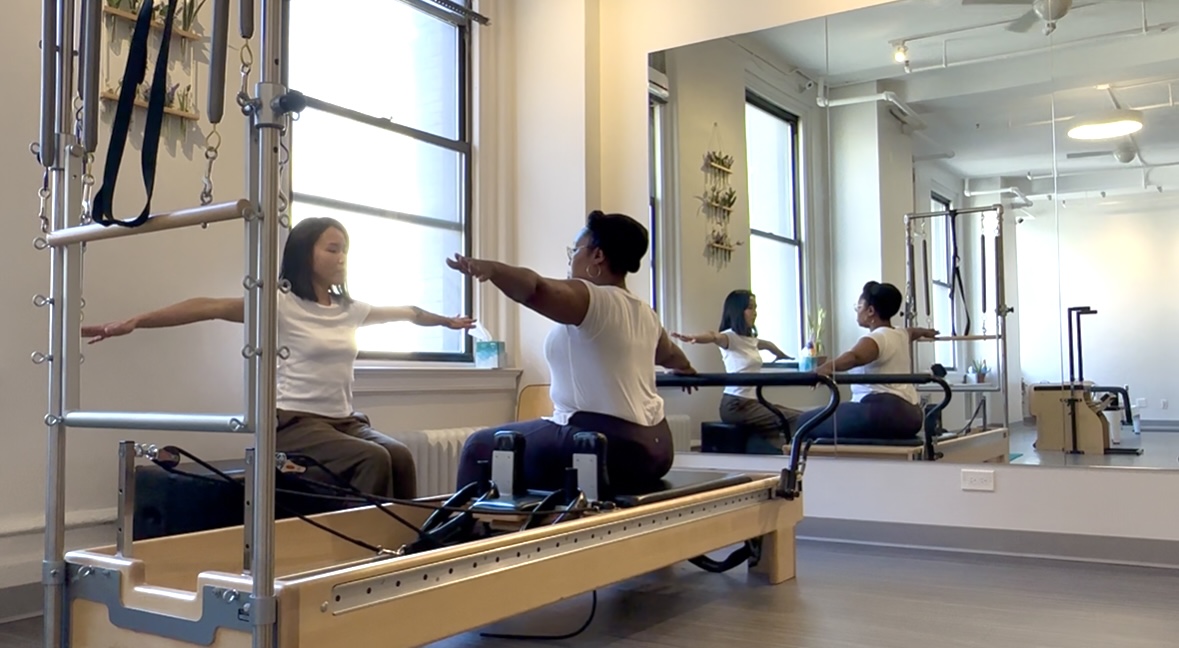
“My experience with Dynamic Body Pilates helped reverse ten years of bad posture and pain.”
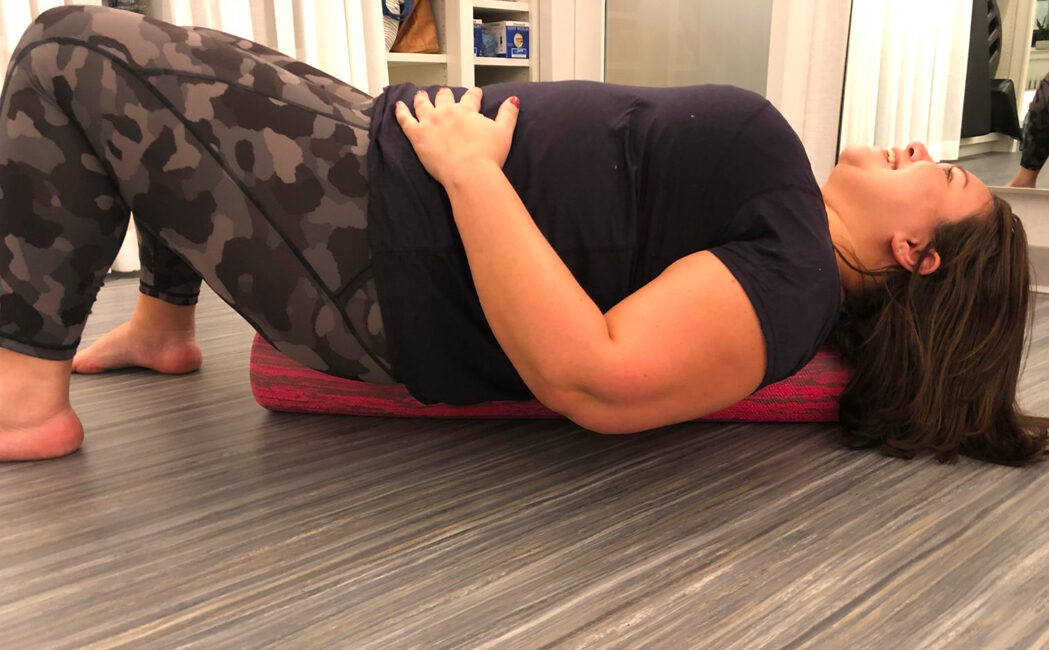
“My back is so much better, and I feel much stronger and in control of my body.”
How Pilates Helps Relieve Pain Between Shoulder Blades and Upper Back
Pilates approaches pain between the shoulder blades differently than traditional exercise or passive treatments.
Instead of focusing only on the painful area, Pilates restores balance across your entire body so the upper back no longer has to compensate.
At Dynamic Body Pilates, we focus on:
- Build deep core strength to better support the spine.
- Improve shoulder blade control so the upper back doesn't have to overwork.
- Restore thoracic mobility to improve how the spine and rib cage move.
- Develop stronger, more natural posture without rigidly "holding" yourself upright.
- Use breath more effectively to reduce unnecessary muscular tension.
Sessions integrate strength, mobility, and alignment work so your body can distribute effort more efficiently.
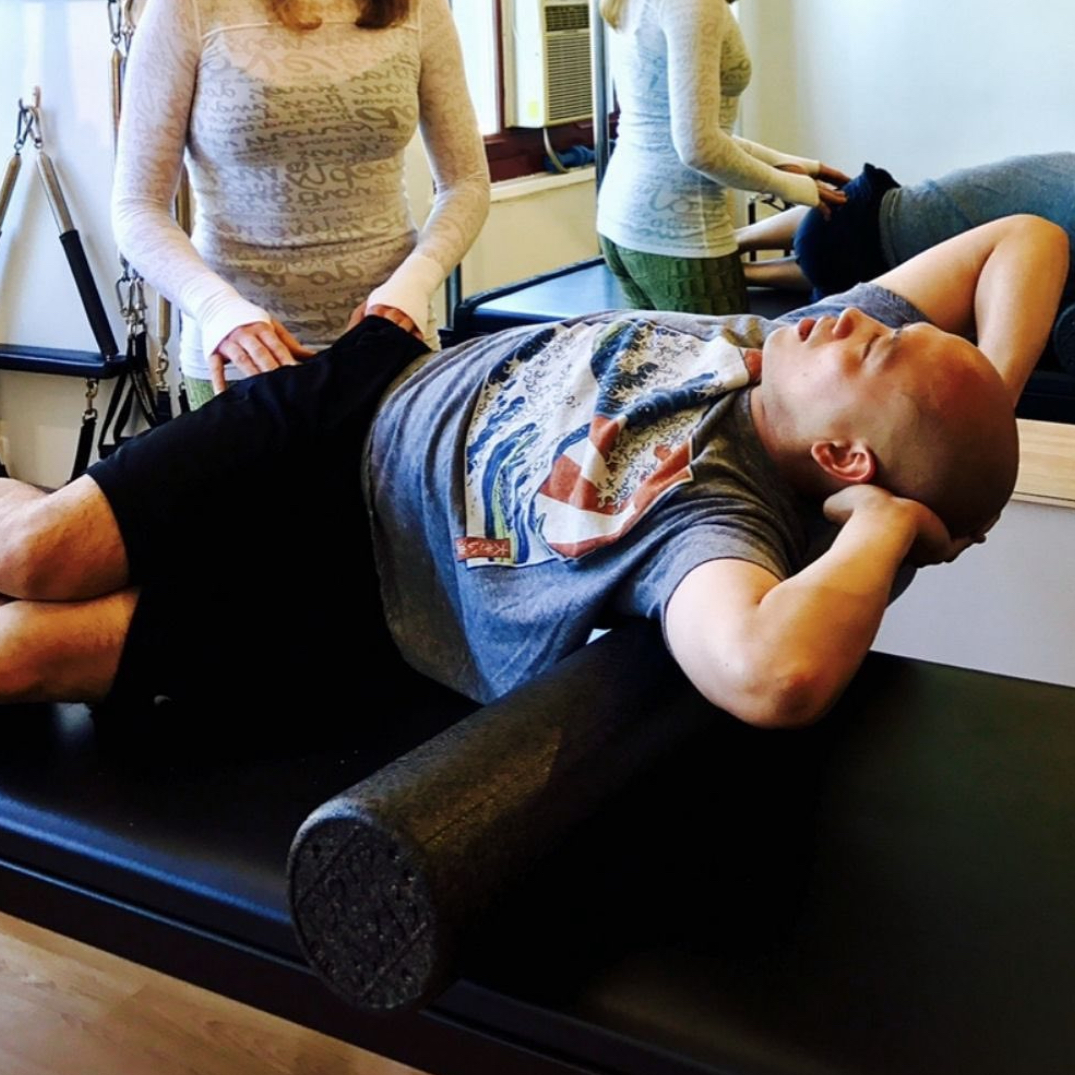
As these systems begin working together, the load placed on your upper back decreases—allowing pain to resolve more naturally.
“I was nervous going in, knowing I have the flexibility of an oak tree and too many little injuries to remember, but my practitioner was amazing at figuring out what was going on with my body. It was as if she had spoken to my physical therapist. She was able to address issues I had with movement from a past knee surgery, in my upper spine and shoulders, and also offered great advice and tips to continue to improve on my movement, flexibility and overall health. I highly recommend this for other grunting lunks like myself who have been skeptical about Pilates up to this point.”
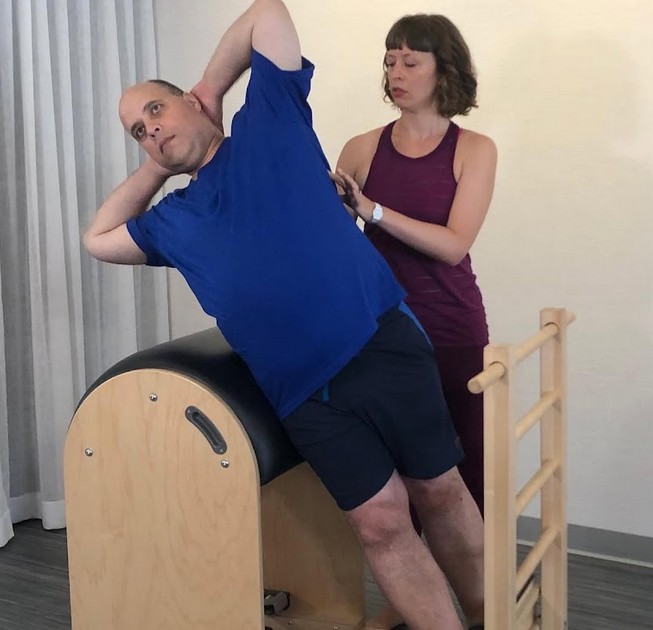
Your Pilates Program Starts With Understanding How You Move
No two people experience shoulder blade and upper back pain in exactly the same way. Your program begins by looking at how your body moves, where you're compensating, and what may be contributing to the strain.
Our approach is:
- Assessment-driven – In our Dynamic Body Assessment Session, we evaluate posture, movement, strength, and flexibility
- Highly individualized – Every session is tailored in real time
- Progressive and supportive – Building strength without strain
- Whole-body focused – Addressing the all contributing factors, not just symptoms
When appropriate, we also collaborate with physical therapists and other providers, helping clients move from treatment toward long-term strength and independence.
The goal isn’t just relief—it’s resilience.
Get Started
Take the first step toward lasting upper back relief.