If you’ve ever lived with a herniated disc, you know the pattern: you bend over to brush your teeth, lift a grocery bag from the floor, or try to put on your shoes — and your back tightens with a force that can reorder the rest of your day. It’s a small moment with a disproportionate impact, the kind of pain that makes even familiar movements feel uncertain.
And perhaps most frustrating of all: you’re genuinely trying. You strengthen your core, you stretch, you move as thoughtfully as you can — yet the pain lingers, just present enough to make you second-guess every twist, reach, or bend.
This is often the point where people begin searching for Pilates for herniated disc pain — not because they want another workout, but because they need a more intelligent way to move. One that helps them feel stable again without aggravating the problem further.
At Dynamic Body Pilates, we see this every week. High-performing New Yorkers who have tried physical therapy, group classes, online routines, or advice from friends — all with commitment and care. Not because they’re doing anything “wrong,” but because healing a herniated disc requires more than general strengthening. It requires specificity, clarity, and an understanding of how your body moves.
This is where one-on-one, fully personalized Pilates becomes a turning point.
“I suffer from a lower back disc herniation, and my work with DBP helped reverse ten years of bad posture and pain.” — Sarah C.
Why Herniated Disc Pain Often Persists — Even When You’re “Doing Everything Right”
People often assume a herniated disc responds to a standard prescription of core exercises and gentle stretching. But disc pain is rarely that straightforward. Two people can have similar MRI findings and completely different experiences because the spine never acts alone — it reflects the patterns and pressures of the entire body.
Your posture, mobility, strength, and daily habits all influence how the disc behaves. A flexible person absorbs force differently than someone who’s naturally stiff. A person who sits for ten hours a day loads their spine differently than someone who stands, lifts, or carries a child on one hip. These differences matter.
“In the past, I wasn’t doing exercises correctly. At DBP, I finally understand how to move with good posture and technique.” — Maida S.
Pilates for Herniated Disc: How Recovery Starts With Understanding Your Movement Patterns
How you moved before a herniated disc — and how you’ve adapted since — shapes the way your spine responds. Many people begin to brace, shift weight to one side, avoid rotation, or unconsciously limit certain ranges of motion. These strategies are understandable; they’re the body’s way of reducing discomfort.
Over time, though, these protective patterns can place more demand on the spine because other parts of the body aren’t contributing as effectively. That’s why general “exercises for herniated discs” often offer temporary relief but don’t create lasting change. They don’t consider your posture, your flexibility, your work habits, your activity level, or the specific movement history that led to the irritation.
Long-term improvement requires a whole-body approach — one that looks at how your pelvis organizes your weight, how your ribs move with the breath, how your core supports rather than grips, and how your legs participate in the load. When these pieces work together, the spine no longer carries more than its share, and disc-related symptoms often begin to quiet.
The Life You Want to Get Back to After a Herniated Disc
Most people seek help for a herniated disc not because they can’t perform an exercise, but because the condition disrupts the activities that structure their daily life. For some, that means running, strength training, playing golf or skiing. For others, it’s lifting a child, carrying groceries, sitting comfortably through the workday, or simply moving without anticipating pain.
These goals are meaningful. They represent independence, identity, and ease in everyday routines.
A herniated disc complicates these moments by introducing uncertainty. Movements that were once automatic become calculated. The question quietly becomes: Will this make things worse?
Generic exercise programs can’t answer that question because they don’t consider the whole of your body or the demands of your life. To make real progress, the approach has to reflect both your biomechanics and your priorities. What you want to return to — and how you want to feel doing it — shapes the entire strategy.
When Physical Therapy Isn’t the Whole Story — and How Pilates Complements Recovery
Many of the people who come to us have already gone through physical therapy. Some feel it didn’t help as much as they hoped. Others made meaningful progress but still don’t feel ready to return to the activities they love. They’ve regained function, but not confidence. They can move, but not with ease.
What they often discover is that recovering from a herniated disc is one phase of healing — learning to move again is another. PT addresses the specific tissues that need attention; Pilates helps you understand how the rest of your body needs to organize around them. Strength is important, yes, but so are coordination, balance, breath, and the way your entire system supports the spine.
We also see clients while they’re in physical therapy. This collaboration often accelerates progress. When we communicate directly with your PT, everyone works from the same map: they focus on the medical and rehabilitative component, while we reinforce movement patterns that make their work more effective. Your body receives consistent messages, not conflicting ones.
The goal isn’t to replace PT or extend it — it’s to bridge the gap between recovery and real movement. And that begins by meeting your body exactly where it is, with an eye toward where it can go.
The Movement Science Behind Pilates for Herniated Disc Relief — In Plain English
Herniated discs — whether in the low back or the neck — rarely develop in isolation. They reflect how the entire body organizes itself, starting from the ground up.
The feet set the foundation.
How your weight moves through your arches, whether one foot rolls in or one leg naturally turns out, influences the alignment of everything above it. An uneven base shifts the workload to the ankles, knees, hips, and ultimately the spine.
From the feet upward, each segment affects the next.
If one arch collapses, the pelvis may rotate.
If the pelvis rotates, the lumbar spine compensates.
If the thorax stiffens, the cervical spine works harder.
For clients with lumbar disc issues, these imbalances often concentrate force in one segment of the low back. For those with cervical disc issues, head position, shoulder tension, or rib mechanics can overload the neck long before symptoms appear.
Posture plays a major role.
A forward head — a common result of screen use — increases pressure on the cervical discs and subtly alters pelvic positioning. Tight hips or a habit of standing more on one leg can place additional demand on the lumbar spine.
These patterns are rarely dramatic; they accumulate gradually through work habits, athletic history, caregiving, or simply repeating the same movements every day.
This is why strengthening or stretching alone rarely resolves disc pain.
A herniated disc improves when the entire system supports it. That requires:
- Feet that provide an even base
- Legs that track cleanly under the pelvis
- A pelvis that sits level enough to support the spine
- Ribs that move with the breath rather than brace
- A head and neck that align over the shoulders
When these components work together, pressure distributes more evenly, and both the cervical and lumbar discs experience less strain. The spine can stabilize without gripping and move without triggering pain.
How Personalized Pilates at DBP Reduces Strain on a Herniated Disc
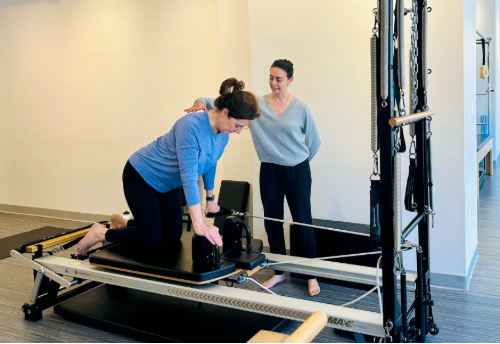
At Dynamic Body Pilates, the first step is understanding how your body moves — not just where the disc is irritated. In a one-on-one assessment, we look at how you stand, how you load your feet, how your pelvis and ribcage respond to gravity, and how your spine organizes itself around those patterns.
From there, the work is individualized. Some people need support calming an acute flare; others need help unwinding long-standing compensations; many active clients need assistance recalibrating how they generate strength. The goal is always the same: reduce unnecessary strain on the disc by helping the whole body share the workload more effectively.
When physical therapy is part of your care, we coordinate with your PT so the strategies align. They focus on tissue-level recovery; we reinforce it through full-body mechanics. This continuity helps reduce flare-ups and improves confidence in daily movement.
“I don’t think exercise should be painful. DBP makes me feel safe and capable.” — Pai P.
Signs Pilates Is Supporting — Not Aggravating — Your Herniated Disc
Recovery from a herniated disc rarely happens all at once. It usually unfolds in steady, incremental changes — signs that your body is learning to distribute effort differently.
Common early shifts include:
- standing without bracing,
- feeling core support without gripping,
- walking with less tension,
- sitting more comfortably,
- lifting or bending with greater confidence.
These improvements may be subtle, but they matter. They indicate better coordination, less strain on the irritated segment, and greater efficiency across the whole system. Feeling better reflects organized, intentional work — not guesswork.
Living With a Herniated Disc: What Matters Most for Long-Term Relief
A herniated disc can be painful, disruptive, and surprisingly persistent — but it is also highly responsive to the right kind of movement. What often feels like a structural problem is, in many cases, a coordination problem: the body relying on a few areas too much and others too little.
With the right guidance, the spine can be supported in a way that reduces strain, calms irritation, and restores confidence. Progress doesn’t come from pushing harder, but from understanding how your body distributes force, how your patterns developed, and how to move in a way that respects both the irritated tissue and the system around it.
When the pieces of your body begin to work together — the feet, the pelvis, the ribs, the breath, the head — the load on the disc changes. Movements that once felt uncertain start to feel more accessible. Daily activities become easier. And strength returns in a way that feels organized rather than effortful.
Recovery is rarely linear, but it is absolutely possible with a clear, whole-body strategy.
Ready to Begin?
If you’re navigating a herniated disc — or dealing with persistent back or neck pain — it can be difficult to understand what’s driving your symptoms. A clearer picture often begins with understanding how your body is organizing itself.
A Dynamic Body Assessment offers that perspective. In this one-on-one session, we look at the full system: how you stand, how you move, how you breathe, and which patterns may be placing extra demand on your spine. From there, we outline a plan that supports your current needs and helps you return to the activities that matter most to you.
Many people find that once movement becomes more organized and better supported, discomfort eases, confidence returns, and daily tasks feel more accessible. The goal is not just relief, but a way of moving that makes sense for your body in the long term.
When you’re ready to explore the next step, we’re here to help you understand what your body needs — and how to move forward with clarity and ease.
FAQs: Pilates for Herniated Disc
Can I do Pilates with a herniated disc?
Yes — when it’s properly individualized. Pilates can be very supportive for a herniated disc when exercises are selected and adapted to your body, your symptoms, and how you move. Generic or group-based programs are often the issue, not Pilates itself.
Does Pilates help with a herniated disc?
It often does. Pilates helps by improving coordination, posture, and whole-body support so the spine isn’t doing more work than it should. When the body shares load more evenly, disc-related irritation often decreases.
Is Pilates safe if I’ve already done physical therapy?
Yes. Many people use Pilates after PT to bridge the gap between rehabilitation and real-life movement. It helps translate isolated strength into confident, supported motion.
What type of Pilates is best for a herniated disc?
One-on-one, personalized Pilates is typically best. It allows the work to adapt to your movement patterns, flare-ups, and daily demands — which is critical with disc issues.
Can Pilates make a herniated disc worse?
It can if exercises are too aggressive, poorly cued, or not tailored to your body. When Pilates is done thoughtfully and progressively, it’s designed to reduce strain — not increase it.
How long does it take to feel results from Pilates with a herniated disc?
Many people notice early changes within a few sessions — such as less bracing or easier daily movement. Long-term improvement builds gradually as coordination and support improve.
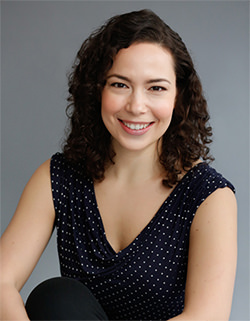
Rebecca Lubart is the founder and CEO of Dynamic Body Pilates, a one-on-one Pilates studio in New York City specializing in chronic pain, movement challenges, and healthy aging. With 20 years of experience teaching Pilates, Rebecca helps people better understand how their bodies move—and how strength, mobility, balance, and coordination work together.
Her approach grew in part from her own recovery from a traumatic injury and the search for more effective, whole-body solutions to persistent pain. She founded Dynamic Body Pilates in 2012 to bring that approach to others. Today, Rebecca and her team help clients move with greater comfort, confidence, and independence through highly individualized Pilates and movement education.