Aging gracefully is about more than appearance alone. It’s reflected in posture, energy, stamina, strength, balance, recovery, and ease of movement—in how comfortably you move through the city, travel, exercise, and live day to day.
Often, the shift is subtle. The body still works—but with a little more effort, tension, stiffness, or fatigue than before.
At Dynamic Body Pilates, we see aging less as a question of avoiding change and more as a question of maintaining adaptability.
How well does your body continue to support the life you want to live?
That’s where Pilates becomes more than exercise.
It becomes a strategy for how you age.
Aging Gracefully Starts with How You Move
When people ask, “How can I age gracefully,” they’re often thinking about:
- staying active
- avoiding pain
- maintaining independence
But underneath all of that is something more foundational: movement quality.
Over time, your body adapts to past injuries, repetitive habits, postural shifts, stress patterns, and the demands of daily life. These adaptations show up as compensation patterns, or subtle changes in how you stand, walk, rotate, stabilize, and recover from activity.
At first, these changes are easy to dismiss.
You stretch more after flights. You stop turning quite as easily to look behind you while walking downtown. You begin choosing restaurants with better chairs without consciously realizing why. A long walk that once felt energizing starts leaving you fatigued, sore, or tight afterward.
Many people remain active well into their 50s, 60s, and beyond. They walk throughout the city, travel frequently, stay socially engaged, and continue doing many of the things they’ve always done.
But activity alone does not necessarily preserve how well the body functions.
We often see clients who walk regularly for exercise, yet still notice increasing fatigue, stiffness, or discomfort during longer walks. Others remain active but have little structured strength or mobility work supporting the demands they place on their body day to day.
Over time, the issue becomes less about whether someone is active—and more about whether their body is adapting well to the activity they’re doing.
Aging gracefully isn’t about preventing change entirely. It’s about recognizing and retraining the patterns that make movement feel increasingly effortful, restricted, or unpredictable over time.
Why Most Fitness Approaches Fall Short for Aging Well
Many of our clients are already active. They work with trainers, walk regularly, strength train, stretch, or have previously done physical therapy.
But despite doing many things “correctly,” they still notice:
- increasing stiffness
- recurring areas of tension
- posture shifts
- balance changes
- a body that feels less coordinated, resilient, or physically available than it once did
Often, the issue is not a lack of effort. It’s that the body has gradually become less organized underneath the movement itself.
Maintaining strength and muscle mass becomes increasingly important with age—but strength alone is not always enough to support how the body functions as a whole.
Many fitness programs prioritize strength, repetition, or intensity. While that can build capacity, it doesn’t always improve how the body coordinates movement.
As we age, that distinction matters.
If movement patterns aren’t efficient, strength work can reinforce compensation instead of resolving it. Over time, the body may build strength while still becoming less integrated, coordinated, or resilient underneath the movement itself.
At Dynamic Body Pilates, the focus shifts from doing more to moving better.
Each session is designed to:
- observe how your body organizes movement
- identify where compensation is occurring
- retrain patterns for more integrated, efficient movement
This is what allows changes to last—not just in how you feel during a session, but in how you move through daily life.
Active Aging: A More Meaningful Way to Think About Aging Gracefully
The phrase “aging gracefully” can sometimes imply slowing down or becoming more cautious. At Dynamic Body Pilates, we use a different framework: Active Aging.
Active Aging isn’t about preserving youth. It’s about preserving—and expanding—your physical capacity over time.
That means:
- maintaining confidence in your movement
- adapting to change without losing function
- preserving the endurance to continue traveling, walking, exercising, and engaging fully in life
- staying connected to the activities that matter to you without your body becoming the limiting factor
The goal is not simply to remain active. It’s to maintain the strength, muscle support, mobility, coordination, and postural endurance that allow activity to continue feeling available, enjoyable, and sustainable.
This perspective shifts the question.
Instead of asking:
“How do I avoid decline?”
The question becomes:
“How do I continue building a body that responds well to the life I want to live?”
How One-on-One Pilates Changes the Way You Age
One of the biggest differences at Dynamic Body Pilates is our one-on-one, private Pilates model.
In a group setting, you follow movement.
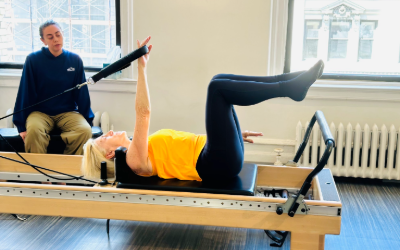
In a one-on-one session, your movement is observed, understood, and guided.
This allows us to see:
- how your body compensates under load
- where stability is coming from (and where it’s not)
- how your posture changes with fatigue
- how different systems—core, breath, joints, balance, coordination—are working together
From there, we build a personalized approach to retraining movement patterns.
Clients often notice:
- improved posture without consciously “fixing” it
- less tension in areas that previously felt chronically tight or overworked
- better balance and coordination
- greater endurance during walking and travel
- more ease in everyday activities like bending, lifting, rotating, and carrying
This isn’t about short-term results. It’s about changing how your body functions long-term.
The Foundations of Staying Strong and Capable as You Age
Aging gracefully isn’t just about feeling better in your body—it’s about maintaining the physical capacity to continue living the way you want to live.
The ability to move confidently, recover well, adapt to physical demands, and remain active over time depends on several systems working together efficiently.
At Dynamic Body Pilates, we focus on the underlying components that support long-term movement quality, resilience, strength, and physical support over time.
Postural Awareness
Posture isn’t something you “fix”—it’s something your body organizes moment to moment.
As we age, subtle shifts in alignment can create inefficient movement patterns that place more strain on certain areas while reducing overall endurance.
Through personalized Pilates, clients begin to:
- recognize patterns of tension or collapse
- develop support that carries into standing, walking, and daily movement
- move with less effort and more efficiency
Often, posture improves not because someone is “trying harder,” but because the body is functioning more cohesively underneath it.
Balance
Balance is often thought of as a static skill, but in reality, it’s dynamic.
It depends on coordination between the muscles, joints, nervous system, vision, and breath.
When balance declines, it’s rarely just about strength. It’s about how effectively the body can respond and adapt.
We train balance by:
- integrating movement across the whole body
- improving coordination and reaction time
- building stability that adapts to movement—not just stillness
This helps clients feel more physically confident not only in the studio, but while walking through the city, navigating stairs, traveling, or moving through daily life.
Breath Work
Breathing directly affects how the body stabilizes, distributes tension, and supports movement.
Over time, inefficient breathing patterns can contribute to:
- excess tension in the neck and shoulders
- reduced core support
- fatigue during walking or activity
- restricted mobility
By retraining breath patterns, we help the body:
- organize movement more efficiently
- reduce unnecessary tension
- improve endurance and physical support
It’s one of the most subtle—but powerful—ways to improve how the body functions.
Joint Mobility
Mobility is not simply flexibility. It’s the ability for joints to move well with both freedom and control.
As mobility decreases, the body often compensates elsewhere. This is where stiffness, imbalance, and recurring discomfort begin to accumulate.
Through guided, precise movement, we work to:
- restore range of motion where it’s been lost
- support joints with appropriate muscular engagement
- improve how force moves through the body
This work also helps support the muscular strength and physical support that become increasingly important for long-term resilience and bone health as we age.
This allows movement to feel smoother, more coordinated, and less effortful over time.
Is It Too Late to Improve Posture or Start Pilates?
One of the most common concerns we hear is whether it’s too late to make meaningful change.
The answer is no.
The body is always adapting. The question is whether those adaptations are working for you or against you.
At our NYC Pilates studio, many clients begin with the assumption that their limitations are permanent—only to discover that their body simply needed a more individualized and integrated approach.
How to Know If You’re Aging Well
Aging well is not something you measure by age—it’s something you feel in how your body responds.
It often looks like:
- movement that feels efficient rather than effortful
- walking, travel, and activity that feel sustainable rather than depleting
- faster recovery after physical demand
- fewer compensations during everyday movement
- confidence in how your body responds to change and challenge
If movement feels increasingly restricted, fatiguing, or unpredictable, that’s not failure—it’s feedback.
Your body is adapting. And adaptation can be retrained.
Aging Gracefully Is Something You Can Influence
Aging is inevitable. How your body moves and adapts over time is not.
When you shift the focus from simply staying active to improving movement quality, you create the conditions for long-term resilience. Instead of working around limitations, your body begins functioning with more efficiency, coordination, and support.
With personalized, one-on-one Pilates, we help reinforce that shift. Over time, this changes the experience of aging itself—from something you manage to something you actively shape.
Take the First Step Toward Aging Well
If you’re starting to notice changes in how your body feels or moves, you don’t have to wait for those changes to become more limiting.
At Dynamic Body Pilates, we begin with a Dynamic Body Assessment Session (DBAS) to understand how your body moves and where support is needed.
From there, we create a personalized plan to help you move more efficiently, feel stronger and more supported, and continue engaging fully in the life you want to live.
FAQs About Aging Gracefully and Pilates
No. Pilates becomes especially valuable with age because it focuses on strength, balance, coordination, mobility, and movement quality—not just intensity.
Many clients begin after noticing increasing stiffness, fatigue, posture changes, or discomfort despite remaining active.
Yes. At DBP, posture is approached as a reflection of how the body organizes movement overall.
As movement patterns become more integrated and supported, posture often improves naturally.
Walking is excellent for overall health, but it does not always maintain the strength, mobility, and postural support the body needs over time.
Many active people still develop tension, fatigue, or compensation patterns that benefit from more individualized movement work.
Yes. One-on-one Pilates helps support strength, muscular endurance, coordination, and overall physical support throughout the body.
At DBP, the focus is not just on building strength, but on improving how the body functions as a whole.
Strength and resistance-based movement become increasingly important for bone health as we age.
Pilates helps support the muscular strength, balance, alignment, and movement quality that contribute to long-term physical resilience.
Aging well is less about age itself and more about how your body responds to daily life.
Movement should feel relatively efficient, sustainable, and supported—not increasingly effortful or limiting over time.
Yes. Physical therapy often addresses specific injuries, while Pilates helps improve broader movement patterns, coordination, posture, and long-term physical support.
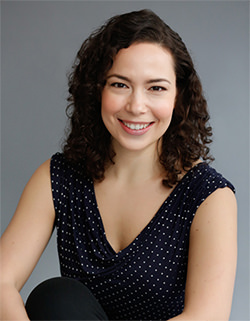
Rebecca Lubart is the founder and CEO of Dynamic Body Pilates, a one-on-one Pilates studio in New York City specializing in chronic pain, movement challenges, and healthy aging. With 20 years of experience teaching Pilates, Rebecca helps people better understand how their bodies move—and how strength, mobility, balance, and coordination work together.
Her approach grew in part from her own recovery from a traumatic injury and the search for more effective, whole-body solutions to persistent pain. She founded Dynamic Body Pilates in 2012 to bring that approach to others. Today, Rebecca and her team help clients move with greater comfort, confidence, and independence through highly individualized Pilates and movement education.