Neck pain during pregnancy is incredibly common. And for many people, it doesn’t fully resolve with stretching, massage, ergonomic adjustments, or reminders to “fix” their posture.
That’s often because the issue isn’t just the neck itself.
Pregnancy (and perimenopause) changes how your body organizes support, balance, breathing, and movement. As those demands increase, the neck and shoulders frequently begin compensating for areas that are no longer coordinating as efficiently.
At Dynamic Body Pilates, we tend to look at neck pain less as an isolated issue and more as part of a larger mechanical pattern. The question usually isn’t just “What should I stretch?” but rather:
Why is the neck working so hard in the first place?
Why Neck Pain During Pregnancy Isn’t Just About Your Neck
Pregnancy changes more than your shape—it changes how your entire system functions.
As your body adapts:
- Your center of gravity shifts forward
- Your ribcage and pelvis change their relationship to each other
- Your breathing mechanics change
- The abdominal wall lengthens and support has to be reorganized
- Hormonal changes increase joint laxity and alter stability
None of this is inherently a problem. It’s your body adapting to the enormous physical demand of growing another human body.
But as coordination and support become harder to maintain through the core, ribcage, hips, and back, the body often starts redistributing work elsewhere. For many people, the neck and shoulders become part of that compensation strategy.
So the issue often isn’t just that the neck is “tight.” It’s that it’s working harder than it was designed to.
The Hormonal Link: Why Pregnancy and Perimenopause Feel Similar
If you’ve ever heard someone describe neck and shoulder pain during perimenopause, you may notice it sounds surprisingly similar to pregnancy.
That’s because both involve significant hormonal, structural, and mechanical change.
Hormonal shifts—whether during pregnancy or perimenopause—can affect:
- Connective tissue integrity and joint support
- Muscle recovery and coordination
- Breathing mechanics
- Nervous system sensitivity
As the body becomes less efficient at creating support through the larger system, it often starts relying more heavily on muscular tension and compensation instead. The neck and shoulders frequently become part of that strategy, helping stabilize posture and breathing when support through the ribcage, core, pelvis, and back is no longer distributing load as well.
At the same time, the nervous system may become more reactive, which can make tension build faster and feel more intense.
Different life stages, similar pattern: the body is adapting to significant internal change while trying to maintain stability, movement, and support.
Why Stretching and Better Posture Aren’t Fixing It
It’s natural to try to stretch your neck when it feels tight. Or to remind yourself to “sit up straight.”
And sometimes those things do help.
But for many people, the relief is temporary because the underlying pattern hasn’t changed.
Posture is more complex than simply pulling yourself upright. Many people trying to “improve” their posture are actually just shifting tension into a different position rather than creating better support through the body. A collapsed posture and a rigid upright posture can both increase strain through the neck, especially when breathing mechanics and trunk support aren’t working efficiently.
The same is true with stretching.
Often, the area that feels tight is reacting to forces being created somewhere else. Many people spend hours leaning toward laptops and phones, allowing the front of the neck to become shortened while the muscles along the back of the neck and upper shoulders become chronically lengthened and overworked. That gripping sensation is often the body trying to pull the head back over the spine rather than letting it drift forward.
But when people try to relieve the discomfort, they often stretch the very muscles already under strain—pulling the head farther forward and reinforcing the same mechanical pattern.
So if the tension keeps returning, it’s worth asking a different question:
Why does my body keep needing my neck to do this work?
If the neck is constantly tightening, it’s often because:
- It’s compensating for a lack of support elsewhere
- It’s helping stabilize a system that isn’t distributing load efficiently
- It’s overworking during breathing, posture, or movement
Until that workload shifts, the tension usually keeps coming back.
Signs Your Neck Is Compensating (Not Just Tight)
A few patterns we commonly see:
- You feel temporary relief from stretching or massage, but the tension quickly returns
- Your shoulders gradually creep upward throughout the day without you noticing
- You constantly try to readjust your posture, but never feel fully comfortable
- Tension builds more when you’re tired, stressed, working at a computer, or standing for long periods
- You notice neck stiffness alongside upper back, jaw, or shoulder discomfort
- Deep breaths feel effortful, or you notice tension increasing when breathing deeply
These usually aren’t just signs of “tight muscles.” More often, they suggest the neck and shoulders are working overtime to help stabilize posture, breathing, and movement when support is not being distributed efficiently elsewhere in the body.
How a Personalized Pilates Approach Relieves Neck Pain at the Source
This is where the approach matters.
At Dynamic Body Pilates, the goal isn’t simply to stretch the neck or strengthen it in isolation. It’s to change how the body distributes load, support, and effort.
We look at the whole body from the ground up. Even the feet, hips, ribcage, and breathing mechanics can influence how much work the neck is doing. In many cases, focusing only on the neck is a bit like repairing the roof of a house without first looking at the foundation. If the underlying support system isn’t working well, the strain usually keeps redistributing somewhere else.
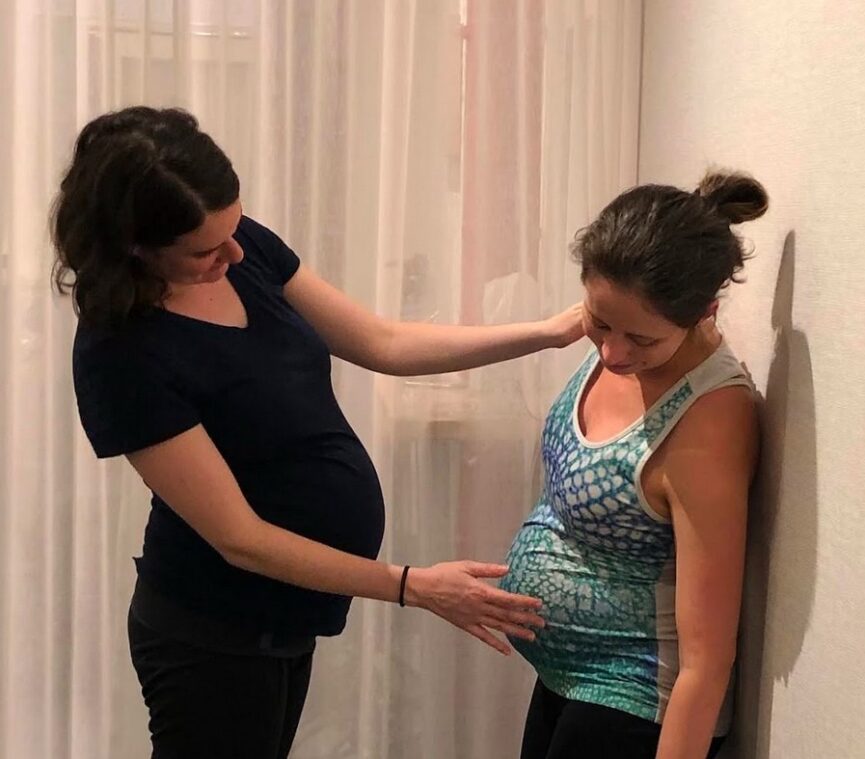
In a one-on-one setting, we look at:
- How you’re breathing
- How your ribcage, spine, and pelvis are coordinating
- Where tension is being created
- Which muscles are overworking to create stability
- How movement patterns are changing as pregnancy progresses
From there, the work becomes less about “fixing” the neck and more about improving how the entire system organizes support.
As breathing mechanics improve and the core, hips, back, and ribcage begin sharing load more efficiently, the neck and shoulders often stop needing to grip as much to stabilize the body.
When that happens, neck tension frequently decreases as a byproduct of better coordination—not because the neck was forced to relax, but because it’s no longer doing the work of other areas.
This becomes especially important during pregnancy, when the body is continuously adapting to rapid structural and hormonal change. Instead of constantly chasing symptoms, the focus shifts toward helping the body respond to those changes more efficiently
A Different Way to Think About Neck Pain During Pregnancy
Neck pain during pregnancy isn’t just about posture, or stress, or sleeping position.
It’s about how your body is organizing itself during a period of rapid change while also doing the enormous work of growing another human being.
As your center of gravity shifts, breathing mechanics change, and stability becomes harder to maintain, the body starts redistributing work. Often, the neck and shoulders become part of that compensation strategy—not because they’re the root problem, but because they’re trying to help manage a system under new demands.
In many cases, the neck is reacting to a lack of support elsewhere. When the core, hips, ribcage, and back aren’t coordinating well, the neck and shoulders often step in to create tension and stability instead.
That’s why temporary fixes often don’t last. The issue usually isn’t just the neck itself. It’s the larger pattern underneath it.
When you shift the focus from simply stretching what hurts to understanding how your body creates support, breathing, and stability, you create the opportunity for more lasting relief. Not just less neck tension, but a body that feels more coordinated, supported, and capable as pregnancy progresses.
Start with a Body Assessment
If your neck pain isn’t going away, it’s likely not just about your neck.
A one-on-one Dynamic Body Assessment Session at Dynamic Body Pilates looks at how your entire system is working—how you move, where you compensate, and what your body may need for better support as it adapts to pregnancy.
From there, you’ll leave with a clearer understanding of why the tension keeps returning and a personalized path forward—so you’re not just managing discomfort, but changing the pattern behind it, even as your body changes.
FAQs About Neck Pain During Pregnancy and Hormonal Changes
Yes. Hormonal changes can affect joint stability, muscle tension, and how your body manages stress. During pregnancy and perimenopause, this often leads to increased reliance on the neck and shoulders for support, which can create pain and tightness.
As your body changes, your center of gravity shifts and your breathing patterns and posture adapt. Your neck and shoulders are affected by everything below. This means the center of gravity is pulling your posture into a very different alignment than it was in before pregnancy.
Hormonal shifts during perimenopause can affect connective tissue, stability, and nervous system sensitivity. The neck and shoulders often start overworking to help stabilize posture and breathing, leading to persistent tightness.
It’s usually a combination. What feels like muscle tightness is often connected to how your joints are being supported. When movement patterns improve, both muscle tension and joint strain tend to decrease.
Movement that improves coordination between your breath, core, and spine is often more effective than stretching alone. This helps reduce the workload on your neck instead of temporarily relieving it.
Yes—when it’s personalized. A one-on-one approach ensures the work supports your body’s changing needs, helping you move more efficiently without adding strain.

Rebecca Lubart is the founder and CEO of Dynamic Body Pilates, a one-on-one Pilates studio in New York City specializing in chronic pain, movement challenges, and healthy aging. With 20 years of experience teaching Pilates, Rebecca helps people better understand how their bodies move—and how strength, mobility, balance, and coordination work together.
Her approach grew in part from her own recovery from a traumatic injury and the search for more effective, whole-body solutions to persistent pain. She founded Dynamic Body Pilates in 2012 to bring that approach to others. Today, Rebecca and her team help clients move with greater comfort, confidence, and independence through highly individualized Pilates and movement education.