How We Think About the Body
Most people come to Dynamic Body Pilates because something about their body is no longer working the way they would like it to.
For some, that means pain. For others, it may be stiffness, balance concerns, declining strength, recurring injuries, poor posture, or the realization that an approach which worked well for years is no longer producing the same results. Some clients are new to Pilates. Others have practiced for decades. Some arrive after physical therapy. Others are returning to exercise after years spent focused on careers, caregiving, illness, injury, or simply the demands of everyday life.
What they often share is a desire to better understand what is happening in their body and what can be done about it.
Over the years, we have found that these issues are rarely as simple—or as isolated—as they first appear. A painful knee may involve the knee, but it may also reflect how the foot interacts with the floor, how the hip supports the leg, how balance influences movement, or how the body has adapted over time. The same is true of many persistent physical concerns. The symptom may be obvious. The factors contributing to it are often less so.
This is one reason we begin by looking at the body as a system rather than a collection of individual parts.
The Body Has a Logic to It
We often tell clients that the body has a logic to it.
By that, we do not mean that every ache, pain, or limitation has a single identifiable cause. The body reflects decades of habits, injuries, sports, occupations, pregnancies, illnesses, stressors, and experiences. We were not there for the last twenty-five years of your life, and we do not pretend to know exactly how every pattern began.
What we can do is look at how your body is functioning today.
Often, there are patterns of movement, compensation, strength, mobility, balance, breathing, or coordination that help explain why a particular issue continues to persist. Sometimes those patterns developed for a very good reason. An old injury may have required you to move differently. A period of pain may have taught your body to guard or avoid certain movements. A demanding job, a sport, or simply the realities of everyday life may have encouraged one strategy while neglecting another.
The challenge is that adaptations that were once helpful do not always remain helpful.
“The body is remarkably adaptable. The challenge is that the strategies it learns to protect us can become the very patterns that keep us stuck.” — Rebecca Lubart, Founder, Dynamic Body Pilates
Over time, the body can become very efficient at repeating a pattern, even when that pattern is contributing to discomfort, limitation, or unnecessary effort. In those situations, focusing only on the symptom may provide temporary relief without addressing the factors that continue to reinforce it.
While we may not always know exactly how a problem began, we can often identify the patterns that are maintaining it. Understanding those patterns helps us determine where meaningful change is possible and how to begin creating it.
“What once helped your body cope may no longer be serving you. Lasting change begins when we understand the patterns beneath the discomfort.” — Rebecca Lubart, Founder, Dynamic Body Pilates
That process begins with observation, assessment, and curiosity. It continues through movement, practice, and feedback. As clients develop a better understanding of how their body organizes itself, movement often becomes less confusing, less frustrating, and more productive.
The goal is to help people build and maintain a body that supports the activities, relationships, work, and experiences that matter to them.
Movement Is More Than Exercise
Some of our clients have exercised consistently for years. Others have completed rounds of physical therapy, worked with personal trainers, attended group fitness classes, or practiced Pilates for decades. Many are returning to movement after a period of inactivity and are trying to rebuild strength, confidence, and capacity.
Their histories may be very different, but one thing remains true: effort is rarely the issue.
What is often missing is a clear understanding of how the body is organizing itself during movement.
Two people can perform the same exercise and have very different experiences. One person may feel supported, stable, and appropriately challenged. Another may compensate through their neck, grip through their lower back, hold their breath, or rely on muscles that were never intended to do the majority of the work.
From the outside, the exercise may appear identical. The experience of performing it is not.
Movement as a Learnable Skill, Built Through Awareness
For this reason, we view movement as something that can be learned and refined throughout life. Strength, mobility, balance, coordination, and posture are not simply attributes we possess or lack. They are skills that can be developed through practice, awareness, and appropriate guidance.
Part of our role is helping clients better understand what they are feeling, what they are doing well, and where there may be opportunities to move more efficiently.
This process is rarely about doing more. In many cases, it is about doing less, noticing more, and developing a clearer understanding of how the body responds.
Over time, clients often become more confident in their ability to interpret what they are experiencing. They learn to distinguish effort from strain, challenge from discomfort, and temporary fatigue from patterns that may not be serving them well.
That understanding extends beyond the studio. The goal is not simply to perform exercises during a session. It is to develop skills that can be applied while working, exercising, traveling, caring for family, participating in sports, and navigating the demands of everyday life.
Why We Work One-on-One in Private Pilates Sessions
No two people arrive with the same body, history, goals, or experiences.
Even when two clients share the same diagnosis, they may move differently, compensate differently, respond differently to exercise, and require entirely different strategies to make progress. A person recovering from an injury, a lifelong athlete, a new parent returning to exercise, and an active retiree may all present with similar symptoms while benefiting from very different approaches.
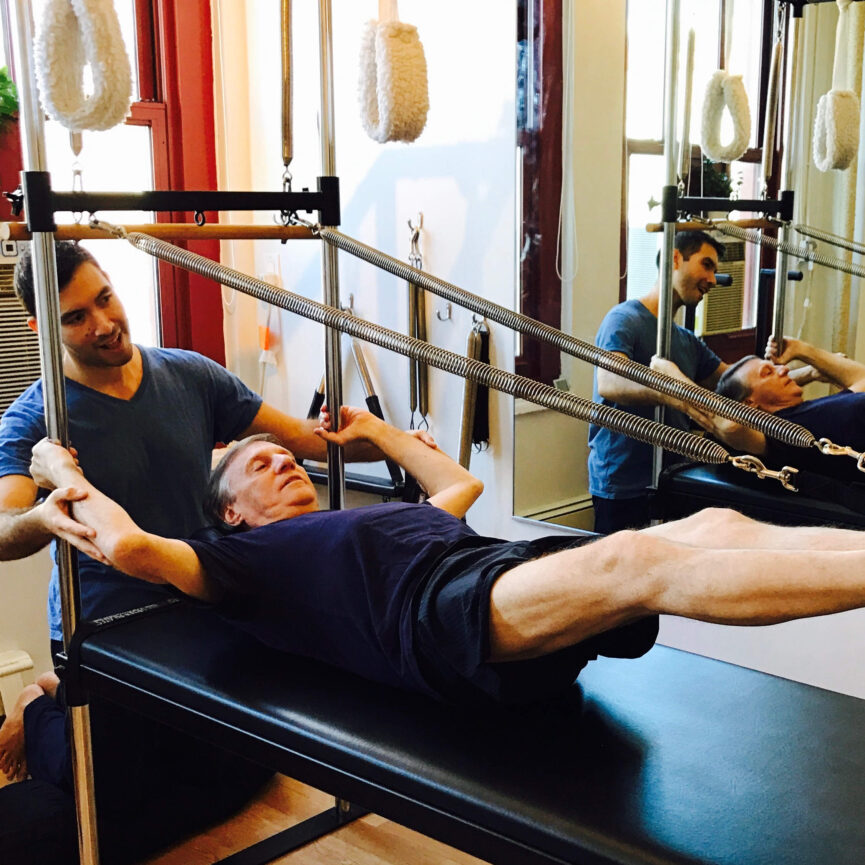
This is one of the reasons Dynamic Body Pilates offers exclusively one-on-one, private pilates.
Private sessions allow us to adapt the work to the individual rather than asking the individual to adapt to a predetermined program. The pace, exercises, level of challenge, amount of feedback, and areas of focus can all change based on what we observe and what the client is experiencing that day.
We view the process as a dialogue.
Part of that dialogue is verbal. Clients help us understand what they are feeling, what has changed since their last session, what feels helpful, and what does not.
Part of that dialogue is physical. The body is constantly providing information through movement quality, breathing patterns, coordination, balance, tension, ease, hesitation, fatigue, and compensation. Learning to recognize and respond to that information is an important part of the process.
Over time, many clients become more skilled at identifying what they are experiencing and communicating it. They begin to distinguish between effort and strain, challenge and discomfort, confidence and uncertainty. That awareness helps create better decision-making both inside and outside the studio.
For us, one-on-one work is not simply about receiving more attention. It creates the conditions for a more individualized, responsive, and effective learning process.
The goal is not to help clients become dependent on instruction. It is to help them develop a deeper understanding of their own bodies and greater confidence in their ability to navigate movement, exercise, and physical challenges throughout their lives.
Expertise Matters: Comprehensively Certified Practitioners
Anyone can call themselves a Pilates instructor.
Unlike many healthcare professions, there is no single governing body that regulates who can use that title, what training is required, or how much experience someone must have before working with the public. As a result, the quality and depth of training can vary considerably.
At Dynamic Body Pilates, we believe that understanding exercise and understanding people are two different skills.
Working with chronic pain, osteoporosis, scoliosis, hypermobility, neurological conditions, balance concerns, post-rehabilitation clients, and other complex movement challenges requires more than familiarity with a diagnosis. It requires an understanding of biomechanics, movement patterns, compensation strategies, and the ability to adapt in real time to the person in front of you.
This is one reason we place such a strong emphasis on continuing education and mentorship. Understanding anatomy, biomechanics, and special populations is important. Equally important is knowing how to apply that knowledge to the person in front of you.
Diagnoses, precautions, and best practices help guide our decision-making, but they do not replace the need to understand the individual. Two people with the same diagnosis may require very different approaches depending on their history, goals, movement patterns, symptoms, and current abilities.
That means listening carefully. It means observing how someone moves, how they respond to feedback, what they are afraid of, what they understand, what they do well, and where they may need more support. It means recognizing when an exercise should be modified, when a different strategy may be appropriate, and when another healthcare professional should be involved.
In our experience, meaningful progress rarely comes from forcing a body into an idealized version of movement. It comes from understanding the person in front of you and helping them build on what they can do today.
Collaborative Care
Many of our clients have worked with physical therapists, physicians, chiropractors, massage therapists, osteopaths, pelvic floor therapists, and other healthcare providers. In fact, many are referred to us by those professionals.
This is not surprising. Different tools solve different problems.
A physical therapist may help someone recover from an injury. A physician may diagnose and monitor a medical condition. A massage therapist may help address tissue restrictions or discomfort. Each plays an important role.
Our work is different.
Whether a client is actively participating in physical therapy, transitioning out of treatment, or simply looking to move and exercise more effectively, our focus is on helping them develop the strength, mobility, balance, coordination, and movement confidence needed for daily life.
While Pilates is not a medical treatment, it can play an important role in helping people better understand their bodies, build capacity, and integrate what they are learning into meaningful, functional movement.
Strength, Mobility & Ease for Life
Most people think about their body in terms of what it needs to do today.
Can I get through my workday? Can I exercise? Can I travel comfortably? Can I keep up with my responsibilities and the activities I enjoy?
These are important questions. We also think about what your body may need to do ten, twenty, or thirty years from now.
Many people entering their sixties, seventies, and beyond today have very different expectations than previous generations. They expect to travel, exercise, participate in sports, remain independent, and continue enjoying active lives for decades.
As a result, maintaining physical function is no longer simply about preserving what you have. It is about continuing to build the strength, mobility, balance, coordination, and confidence that will support the life you want to live in the future.
We often think about this in terms of reserves.
Just as financial planning involves building resources for the future, physical well-being benefits from the same approach. The more strength, mobility, balance, and movement confidence you build today, the more capacity you have to draw upon when life becomes more demanding.
For one person, that may mean continuing to ski, hike, travel, or participate in sports for decades to come. For another, it may mean confidently carrying luggage through an airport, walking long distances without discomfort, recovering from an illness or surgery, playing with grandchildren, navigating stairs, or maintaining independence later in life.
The specific goal is different for every client. The principle is the same.
We are interested in helping people build a body that is prepared not only for the demands of today, but also for the opportunities and challenges that lie ahead.
Many people assume that declining strength, worsening balance, increasing stiffness, or reduced confidence are inevitable consequences of aging. While change is a natural part of life, we have found that people often underestimate their capacity for improvement.
The goal is not to turn back the clock or recreate the body you had at twenty-five. It is to continue developing the strength, mobility, fitness, and ease that allow you to participate fully in the activities, relationships, work, and experiences that matter to you.
Putting It Into Practice
Every person who walks through our doors arrives with a different history, different goals, and different challenges. Some are looking to resolve pain. Some want to improve strength, balance, posture, or mobility. Others are focused on maintaining an active lifestyle and preserving the physical capacity to continue doing the things they enjoy for years to come.
What they share is a desire to better understand their bodies and move through life with greater confidence.
The goal is not to help clients become dependent on instruction. It is to help them develop a deeper understanding of their own bodies and greater confidence in their ability to navigate movement, exercise, and physical challenges throughout their lives.
Whether you are recovering from an injury, managing a long-standing concern, returning to exercise, or simply looking for a more individualized approach to fitness and healthy aging, our work begins in the same place: understanding where you are today and identifying what is possible moving forward.
Start with a Dynamic Body Assessment
Every new client begins with a one-on-one Dynamic Body Assessment Session.
This 90-minute session allows us to evaluate how your body is functioning today, identify patterns that may be contributing to pain, limitation, or inefficiency, and better understand your goals.
We assess factors such as posture, strength, mobility, balance, coordination, gait, and movement habits while discussing your health history, lifestyle, and concerns.
By the end of the session, you’ll have a clearer understanding of what we see, how we would approach your goals, and whether Dynamic Body Pilates is the right fit for you.
Schedule a consultation to get started.
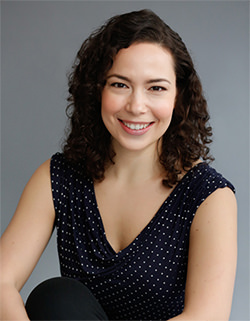
Rebecca Lubart is the founder and CEO of Dynamic Body Pilates, a one-on-one Pilates studio in New York City specializing in chronic pain, movement challenges, and healthy aging. With 20 years of experience teaching Pilates, Rebecca helps people better understand how their bodies move—and how strength, mobility, balance, and coordination work together.
Her approach grew in part from her own recovery from a traumatic injury and the search for more effective, whole-body solutions to persistent pain. She founded Dynamic Body Pilates in 2012 to bring that approach to others. Today, Rebecca and her team help clients move with greater comfort, confidence, and independence through highly individualized Pilates and movement education.