The connection between physical therapy and Pilates
Physical therapy and Pilates are often viewed as separate disciplines — one rooted in clinical rehabilitation, the other in movement and exercise. But at their core, both aim to help the body move with greater efficiency, support, and less strain.
Physical therapy is often essential after injury, surgery, or periods of significant pain. It focuses on restoring strength, mobility, and function in specific areas of the body. Pilates, particularly when practiced through a rehabilitative lens, builds on that foundation by helping the body move more cohesively as a whole.
Developed in the early 20th century, Pilates emphasizes alignment, coordination, controlled movement, breath, and body awareness — qualities that become especially important once pain has decreased and the body is ready to move more intelligently again.
For many people, physical therapy and Pilates work best together. Physical therapy can help restore baseline function, while Pilates helps reinforce healthier movement patterns, improve overall support, and reduce the likelihood of falling back into the same compensations that contributed to discomfort in the first place.
This overlap has gained increasing attention in recent years, especially among individuals looking to bridge the gap between rehabilitation and long-term strength, mobility, and resilience.
The differences between physical therapy and Pilates
While physical therapy and Pilates can complement one another, they serve different purposes and operate within different scopes.
Scope of practice
Physical therapists are licensed medical professionals trained to diagnose and treat musculoskeletal conditions, injuries, and post-surgical recovery. They may use techniques such as manual therapy, joint mobilization, soft tissue work, corrective exercise, or dry needling as part of treatment.
Pilates instructors are not medical providers. However, practitioners with strong rehabilitative training often work alongside healthcare professionals to help clients rebuild strength, coordination, balance, and movement confidence after injury or chronic pain.
Assessment and outcomes
Physical therapy assessments typically focus on pain levels, range of motion, strength deficits, and restoring function related to a specific injury or diagnosis.
Rehabilitative Pilates assessments often focus less on isolated symptoms and more on how the body is functioning as a whole — including posture, compensation patterns, coordination, balance, breath mechanics, and how different areas of the body influence one another.
Physical therapy is often goal-oriented within a medical framework and insurance timeline. Pilates offers a more open-ended approach centered around long-term movement quality, strength, adaptability, and overall wellness.
Session structure
A physical therapy session may include modalities such as electrical stimulation, manual therapy, mobility work, and targeted strengthening exercises.
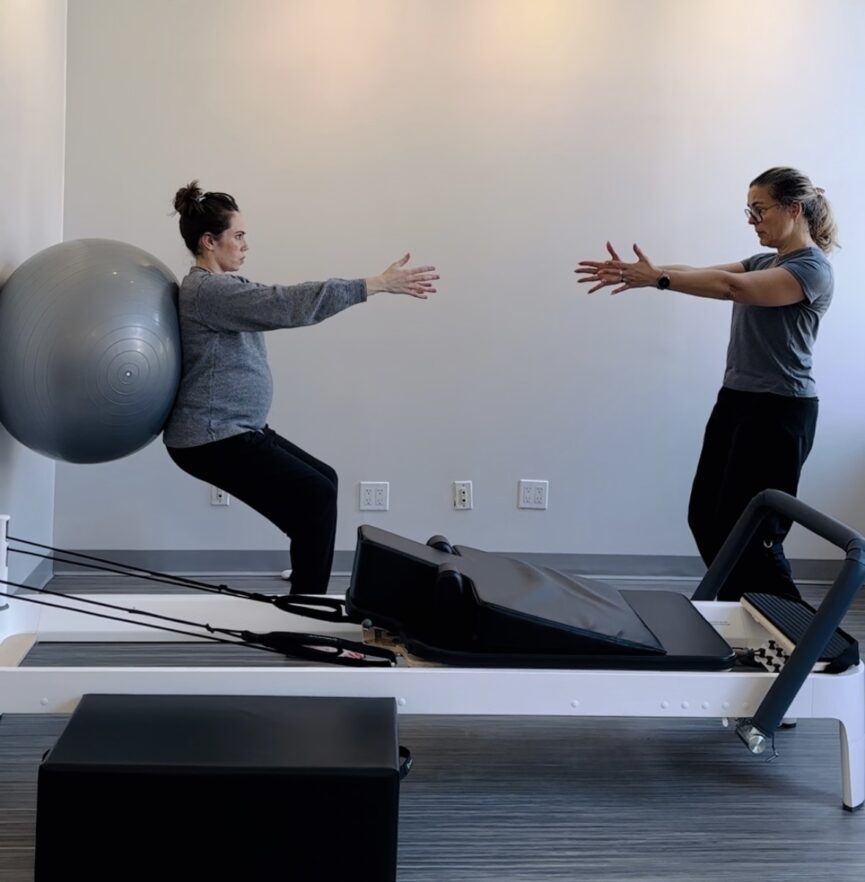
Pilates sessions use spring-based equipment, bodyweight resistance, and carefully guided movement sequences designed to improve alignment, control, stability, and whole-body coordination.
In practice, the two approaches often overlap — particularly for individuals recovering from injury, managing chronic pain, or trying to return to higher levels of activity safely and sustainably.
What is physical therapy?
Physical therapy is a clinical healthcare profession focused on restoring movement, reducing pain, and improving physical function after injury, surgery, illness, or chronic conditions.
Treatment typically begins with a formal evaluation and individualized plan of care. Depending on the situation, treatment may include:
- Manual therapy to mobilize joints or soft tissues
- Corrective exercises to improve strength and mobility
- Balance or gait training
- Neuromuscular reeducation
- Post-surgical rehabilitation
Physical therapy is highly valuable for addressing acute injuries and restoring foundational function. It is also regulated and commonly covered by health insurance.
However, once initial goals are met, patients are often discharged even though larger movement habits, compensation patterns, or coordination issues may still remain.
This is where Pilates can become an important next step — helping individuals move with greater support, awareness, symmetry, and control so improvements are more likely to hold over time.
(Check with your coverage provider, as Health Spending Accounts or Flex Spending Accounts can often help cover a portion of Pilates sessions as well.)
What is Pilates?
Pilates is a movement system originally developed by Joseph Pilates in the early 20th century. While often associated with fitness, Pilates was initially created to help people rebuild strength, coordination, and control after injury and physical stress.
At its core, Pilates focuses on how the body organizes movement. Rather than isolating muscles, it trains the body to work more cohesively through alignment, breath, coordination, balance, and controlled strength.
Key principles of Pilates include:
- Precision and quality of movement
- Breath-driven control
- Core support and spinal stability
- Coordination and balance
- Whole-body integration
When practiced with a rehabilitative approach, Pilates becomes more than exercise. It helps individuals better understand how they move, where they compensate, and how to build more sustainable support throughout the body.
Its low-impact nature makes it particularly beneficial for those recovering from injuries, dealing with chronic pain, navigating age-related stiffness, or looking to improve overall mobility and strength without excessive strain on the joints.
Physical Therapy and Pilates work together for optimal rehabilitation
For individuals navigating injury, pain, surgery, or limited mobility, physical therapy can provide essential medical support and restore baseline function.
Pilates can then help build on that progress by improving coordination, movement efficiency, adaptability, strength, and overall body awareness.
Rather than viewing physical therapy and Pilates as competing approaches, many people benefit most from using them together — allowing rehabilitation to transition into more sustainable long-term movement and physical resilience.
A personalized, holistic approach to rehabilitative Pilates
At Dynamic Body Pilates, we understand that pain and injury rarely exist in isolation — and recovery is rarely as simple as strengthening one area of the body. That’s why we focus exclusively on one-on-one, rehabilitative Pilates designed to help bridge the gap between rehabilitation and truly sustainable movement.
Our process begins with a comprehensive Dynamic Body Assessment, where we evaluate posture, strength, coordination, balance, flexibility, compensation patterns, and overall movement quality. From there, we create personalized programming tailored to your body, history, goals, and lifestyle.
Whether you are recovering from injury, transitioning out of physical therapy, or simply looking to move with greater support and confidence, our goal is to help you build lasting strength, mobility, and ease throughout the entire body.
Book your complimentary phone consultation today to learn more about our individualized approach to rehabilitative Pilates.
FAQs About Physical Therapy and Pilates
Do I need physical therapy before starting Pilates?
Not always. If you’re dealing with acute pain, a recent injury, or post-surgical recovery, physical therapy is often an important first step. Pilates can then build on those improvements by helping the body move more efficiently and sustainably over time.
Can I do Pilates while I’m still in physical therapy?
In many cases, yes — especially when there is communication between providers. Pilates can complement physical therapy by reinforcing movement patterns, improving body awareness, and building strength in a more integrated, whole-body way.
What does Pilates do that physical therapy doesn’t?
Physical therapy often focuses on resolving a specific injury or dysfunction. Pilates looks at how different parts of the body are working together — and where compensation patterns may still be creating strain or inefficiency.
Is Pilates safe if I’m recovering from an injury?
Yes, when it is appropriately individualized. A one-on-one, rehabilitative approach allows exercises and movement patterns to be adapted to your body, injury history, and current level of function.
When should I transition from physical therapy to Pilates?
A common transition point is when pain has decreased and basic function has returned, but movement still feels limited, unstable, or disconnected. Pilates can help bridge that gap by improving coordination, support, and overall movement quality.
Can Pilates replace physical therapy?
They serve different purposes. Physical therapy is important for diagnosing and treating injuries. Pilates can then build on that foundation by improving how the body functions as a whole.
Why do I still have pain after finishing physical therapy?
This is more common than many people expect. You may have regained strength or mobility in one area, while broader movement habits or compensation patterns throughout the body remain unchanged. Pilates helps reorganize how the body moves as an integrated system rather than focusing on one isolated area alone.
What makes rehabilitative Pilates different from a regular class?
It’s individualized. Rather than following a generalized class sequence, sessions are designed around your body, goals, limitations, and movement patterns. The focus is on quality of movement, coordination, support, and long-term function.
Can Pilates help prevent future injuries?
Yes — especially when it focuses on improving how the body moves overall. Better coordination, alignment, balance, and strength throughout the body can help reduce repetitive strain and decrease the likelihood of recurring injuries.
What if I’ve tried Pilates before and it didn’t help?
Not all Pilates is the same. Group classes and generalized programs may not address your specific needs, compensation patterns, or injury history. A more personalized, assessment-driven approach can lead to significantly different results.

Rebecca Lubart is the founder and CEO of Dynamic Body Pilates, a one-on-one Pilates studio in New York City specializing in chronic pain, movement challenges, and healthy aging. With 20 years of experience teaching Pilates, Rebecca helps people better understand how their bodies move—and how strength, mobility, balance, and coordination work together.
Her approach grew in part from her own recovery from a traumatic injury and the search for more effective, whole-body solutions to persistent pain. She founded Dynamic Body Pilates in 2012 to bring that approach to others. Today, Rebecca and her team help clients move with greater comfort, confidence, and independence through highly individualized Pilates and movement education.