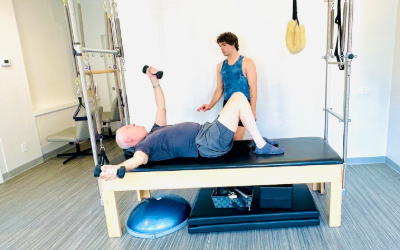
Pilates can help you move with back pain by changing how your whole body shares the work of movement. Rather than simply doing a lot of ab exercises or gentle stretches, Pilates helps you become aware of how your whole body can share the load and coordination of performing every movement and where your back may be doing more than its fair share.
That is part of why Pilates can be useful for back pain in the first place. From there, Pilates gives us ways to change the movement itself: adding support, changing resistance or range, working in a different position, or breaking a larger movement into smaller pieces.
The goal isn’t to permanently avoid whatever hurts. It’s to help your body develop more options for accomplishing movement so that, over time, you can move more efficiently with better strength, flexibility, and coordination to stop re-aggravating the pain altogether.
Back Pain Doesn’t Tell Us the Whole Story
Back pain tells us where you hurt. It does not necessarily tell us why that area is taking on so much work—or everything your Pilates session should address.
Your lower back may be involved because your hips are not contributing enough. You may be using excessive tension through your trunk because your legs are not providing enough support. Or you may have plenty of flexibility but not enough strength or control to manage the range you already have.
That is why two people who both arrive saying, “My back hurts,” can need completely different sessions.
As Dynamic Body Pilates founder Rebecca Lubart says:
“If twenty people with back pain walked into our studio, they’d get twenty different workouts.”
The goal is not to treat the words back pain as a workout prescription. It is to understand how that particular person is moving.
Your Core Shouldn’t Work by Itself
People with back pain are frequently told they need a stronger core.
Core strength absolutely is a part of the picture.
But Pilates for back pain shouldn’t mean spending an hour doing abdominal exercises.
Instead, your core has to integrate and coordinate with the rest of your body whether the exercise be more arm, glute, or leg dominant in focus.
When you climb stairs, for example, your legs and hips need to generate force while your trunk organizes around that movement. When you pick something up from the floor, your hips, legs, feet, trunk, and back all have to negotiate load together.
So instead of only asking, Are your abdominals strong enough?, we may be asking:
Can your trunk stay supported while your hip moves?
Can your legs create force without your low back trying to create it for them?
Can your pelvis and trunk coordinate rather than fighting each other?
Those are much more useful questions and exercises to organize than simply trying to “strengthen your core.”
Sometimes We Change the Movement to Change the Pattern
One of the most useful things about Pilates is that we have many ways to alter a movement without abandoning its purpose.
We can change your position, add support, adjust resistance, reduce the range, slow the movement down, or break a complex movement into smaller pieces.
But at DBP, modification is not simply about making an exercise easier. It gives us information.
If a movement feels better when we change the position of your pelvis, what does that tell us?
If your back stops gripping when your leg has more support, what changes?
If you can organize your trunk effectively lying down but lose that organization when standing, what do we need to build before progressing?
The modification gives us another way to understand what your body is doing—and then build from there.
The Goal Isn’t to Get Better at Avoiding Movement
When a movement consistently aggravates your back, avoiding it may be appropriate for a period of time.
But ultimately, you need to bend, rotate, get out of chairs, climb stairs, lift things, reach, walk, and respond when life puts your body somewhere you didn’t carefully rehearse first.
So the longer-term question is:
How can we give your body enough strength, coordination, and support to make that movement available again?
Sometimes that means practicing a smaller version, strengthening another part of the body first, or breaking the movement apart before putting it back together.
Your Pilates Should Prepare You for Your Life
The goal is not simply to become better at Pilates.
If you want to travel, run, lift weights, garden, carry groceries, or pick up your grandchildren, your Pilates program should eventually prepare your body for those demands.
One Dynamic Body Pilates client who came to us with low back pain described his progress this way:
“I also wanted to run for fitness but couldn’t. Well, now I can run.” — Chris K.
That is what progress can look like: having enough strength, coordination, mobility, and movement options to do more of what you actually want to do.
Finding the Right Pilates Approach for Back Pain
Pilates gives us many ways to explore and progress movement. What matters is how those exercises are selected, how your body responds, and what we do next with that information.
That is why the kind of Pilates you choose can matter when you are dealing with back pain. The right approach isn’t necessarily the one with the most exercises or the most challenging workout. It is the one that can be adapted to your body and progressed as your movement changes.
If you’re ready to look at your own movement rather than simply follow a generic back-pain workout, Dynamic Body Pilates starts with a 90-minute Dynamic Body Assessment. Rebecca looks at how your body is moving, where you may be compensating, and how different movements affect your back. From there, your Pilates sessions can be built around what you actually need.
You can learn more about Pilates for back pain at Dynamic Body Pilates or schedule a complimentary 15-minute call to talk through whether this approach is right for you.
And if you’re still deciding what kind of Pilates makes sense for your back, continue to explore what kind of Pilates is best for back pain.
FAQs About How Pilates Can Help You Move With Back Pain
Can Pilates make back pain worse?
Pilates can aggravate back pain if exercises are not appropriate for the individual, are progressed too quickly, or are performed in a way that increases symptoms. A well-adapted Pilates program can modify position, resistance, range of motion, or movement complexity to find a more manageable starting point and progress from there.
What Pilates exercises are best for back pain?
There is no single set of Pilates exercises that is best for everyone with back pain. The appropriate exercises depend on how a person moves, what aggravates their symptoms, and where they need more strength, mobility, support, or coordination. Exercises can then be adapted and progressed as movement improves.
Should I avoid exercise when I have back pain?
Not necessarily. While temporarily avoiding a movement that consistently aggravates your back may be appropriate, long-term progress usually involves gradually rebuilding the strength, coordination, and mobility needed for everyday movements. Pilates can provide ways to modify and practice those movements as you build back toward the activities you want to do.
How can Pilates be personalized for back pain?
Pilates can be personalized by changing an exercise’s position, resistance, range of motion, speed, or level of support. At Dynamic Body Pilates, the goal is to understand how an individual is moving and use that information to select and progress exercises rather than relying on a generic back-pain workout.
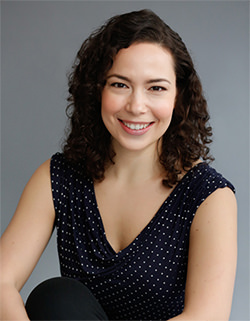
Rebecca Lubart is the founder and CEO of Dynamic Body Pilates, a one-on-one Pilates studio in New York City specializing in chronic pain, movement challenges, and healthy aging. With 20 years of experience teaching Pilates, Rebecca helps people better understand how their bodies move—and how strength, mobility, balance, and coordination work together.
Her approach grew in part from her own recovery from a traumatic injury and the search for more effective, whole-body solutions to persistent pain. She founded Dynamic Body Pilates in 2012 to bring that approach to others. Today, Rebecca and her team help clients move with greater comfort, confidence, and independence through highly individualized Pilates and movement education.