Understanding the Value Behind One-on-One Pilates
Private Pilates is undeniably more expensive than joining a group class.
It’s also one of the questions we hear most often.
Not always directly.
Sometimes it’s, “How many sessions do people usually do?”
Sometimes it’s, “Can I just start with one?”
And sometimes it’s simply the hesitation that comes when someone has already invested time and money into other treatments without finding the results they were hoping for.
They’re wondering:
Will private Pilates sessions actually be different?
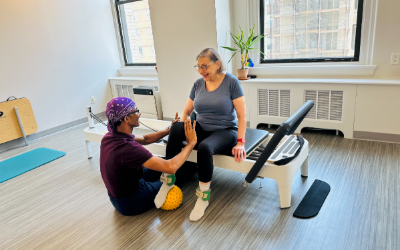
In many cases, yes. Private Pilates is different because you’re not simply paying for an hour of exercise. You’re working one-on-one with a comprehensively trained practitioner who continually evaluates how your body moves, adapts the session to your needs, and helps you build strength, reduce pain, and move more efficiently over time.
Is Private Pilates Worth the Cost?
For many people, yes—but it depends on your goals. Private Pilates offers individualized assessment, expert guidance, and sessions tailored specifically to your body. If you’re managing pain, recovering from an injury, or want personalized movement strategies rather than a general workout, many people find the long-term value outweighs the higher upfront cost.
What Are You Actually Paying For?
You’re Not Paying for an Hour of Exercise
One of the biggest misconceptions about private Pilates is that you’re paying for someone to count your repetitions or watch you exercise.
If that’s all we were doing, it probably wouldn’t be worth it.
You’re paying for something much harder to see—but often makes the biggest difference.
You’re paying for clinical reasoning.
For observation.
For years of education and experience that allow your practitioner to recognize why one exercise works beautifully for one person and causes discomfort for another.
You’re paying for someone to notice the subtle movement habits you may never see yourself—and to understand how those habits affect everything from your posture and breathing to your strength, balance, and pain.
Most importantly, you’re paying for a strategy.
Not simply a workout.
Think about it this way. We don’t hire an accountant because we can’t do math, or an architect because we can’t draw. We hire experts because they see things we don’t. Movement is no different.
Why Prices Vary So Much
If you’ve looked around, you’ve probably noticed that private Pilates prices vary widely. Much of that difference comes down to the practitioner—their education, experience, continuing education, and the populations they’ve been trained to work with. Teaching general fitness is very different from helping someone navigate chronic pain, osteoporosis, scoliosis, pregnancy, neurological conditions, or post-surgical recovery. Those differences matter, especially when you’re trusting someone with your body.
One client captured this perfectly.
She was a young woman, a childhood cancer survivor living with scoliosis, osteoporosis, pelvic pain, and severe back pain.
Over the years, she tried almost everything.
She spent months in physical therapy, only to find herself in more pain.
She worked with several classically trained Pilates instructors who insisted she needed to perform certain exercises. Her pain got worse.
A personal trainer encouraged her to lift heavier for bone density and told her not to worry too much about her form. Again, she ended up in more pain.
She even sought out two of the “best” physical therapists in New York through referrals from her concierge doctor.
By the time she came to us, she wasn’t looking for another opinion.
She was exhausted.
Instead of giving her another list of exercises, we slowed down.
We figured out which movements actually helped her body—and which ones didn’t. We rebuilt her movement from the ground up, progressing only when her body was ready.
A few months later she wrote:
“I’m so strong and have developed routines I can do independently, which she encourages. I’m doing things I’ve never been able to do.”
Her story isn’t unusual.
Many of our clients don’t come to us first. They come after trying physical therapy, massage therapy, chiropractic care, personal training, online programs, or group Pilates classes.
That’s why expertise matters.
Private Pilates isn’t valuable simply because it’s one-on-one.
It’s valuable because someone is continually asking,
“Is this the right exercise for this body, today?”
—and changing the strategy when the answer is no.
The Value Isn’t Limited to the Studio
Our goal isn’t to create a body that only moves well during Pilates.
It’s to help you sit more comfortably through a workday.
Feel stronger at the gym.
Travel without your back flaring up.
Play with your children.
Avoid surgery when possible.
Recover more confidently after surgery when it isn’t.
Stay active as you age.
Move through life with less effort and more confidence.
The hour you spend with us is important.
But what happens during the other 167 hours of your week is what really matters.
As one client put it:
“I leave not just with relief, but with tools I can use in my daily life to keep feeling good.”
Another shared something I appreciate for its honesty:
“Although it is a little expensive for my budget, I am amazed at my progress check-ins, how far I’ve come with their guidance, and feel it’s worth it as a healthful investment for my future.”
To me, that’s the difference between cost and value.
Private Pilates vs. Other Health Investments
Many people compare the cost of private Pilates to a gym membership. A more accurate comparison is often physical therapy, personal training, massage therapy, or other movement-based care. While those services each have an important role, private Pilates is uniquely designed to help you move more efficiently toward your specific goals. Every session is adapted to your body, so you’re spending your time on what you need most—not simply doing more exercise.
Is Private Pilates Worth It?
That depends on what you’re looking for. We don’t believe everyone needs private Pilates.
If you’re simply looking for a great workout, there are many excellent group Pilates classes and fitness studios in New York.
If you’re looking for someone to understand your body, develop a strategy that’s specific to your goals, and help you move through life with greater strength, confidence, and ease, private Pilates offers something very different.
The real value isn’t measured by the hour you spend in the studio.
It’s measured by what that hour makes possible everywhere else.
When clients tell us they’re sitting through meetings without pain, traveling comfortably, avoiding surgery, returning to the gym with confidence, or finally understanding their own bodies after years of frustration, they’re no longer talking about the cost of Pilates.
They’re talking about the value of feeling like themselves again. That’s the value they’re investing in.
FAQs About the Cost of Private Pilates
Why is private Pilates more expensive than group classes?
Group classes are designed for many people. Private Pilates is designed for one: you. Every session is tailored to your body, your goals, and how you move, with a practitioner continually adapting the work as your body changes.
How many private Pilates sessions do most people need?
It depends on your goals and starting point. Some clients come for a short-term goal, while others continue because they value the strength, accountability, and individualized guidance. After your Dynamic Body Assessment, we’ll recommend a plan that’s realistic and tailored to your needs.
Is private Pilates worth it if I’ve already tried physical therapy?
For many of our clients, yes. Some come to us while they’re still in physical therapy, while others transition to Pilates after they’re discharged. We build on what you’ve already learned and help you apply it to the way you move in everyday life.
Do I need private Pilates, or would a group class be enough?
If you’re generally healthy and simply looking for a great workout, a group class may be a great fit. But if you’re managing pain, recovering from an injury, unsure whether you’re doing exercises correctly, or want a program built specifically around your body and goals, private Pilates offers a level of individualized guidance that a group class can’t provide.
Is private Pilates covered by insurance?
Private Pilates is generally not covered by insurance because it’s considered a fitness and wellness service rather than medical treatment. Some clients use HSA or FSA funds when eligible, so it’s worth checking with your plan administrator.
Why do private Pilates sessions cost more than gym memberships?
A gym membership provides access to equipment and classes. Private Pilates includes one-on-one instruction, individualized programming, ongoing movement assessment, and expert guidance tailored specifically to your body and goals.
Can I transition from private Pilates to group classes?
Yes. Many clients begin with private sessions to build strength, confidence, and movement awareness before transitioning to group classes. Others continue privately because they appreciate the individualized attention. Your practitioner can recommend what makes the most sense for your goals.

Rebecca Lubart is the founder and CEO of Dynamic Body Pilates, a one-on-one Pilates studio in New York City specializing in chronic pain, movement challenges, and healthy aging. With 20 years of experience teaching Pilates, Rebecca helps people better understand how their bodies move—and how strength, mobility, balance, and coordination work together.
Her approach grew in part from her own recovery from a traumatic injury and the search for more effective, whole-body solutions to persistent pain. She founded Dynamic Body Pilates in 2012 to bring that approach to others. Today, Rebecca and her team help clients move with greater comfort, confidence, and independence through highly individualized Pilates and movement education.